
Home / Free lead distribution software
Free Lead Distribution Software
Six free and open-source tools that can actually route leads, what each one does well, where it stops, and when a free trial of a dedicated platform is the better deal.

Free lead distribution software exists, with one condition: it routes leads to your own team. Open-source CRMs assign inbound leads to reps in rotation, hosted CRMs do the same on a free plan, and automation tools let you build any rule you like. None of them sell leads to several buyers with caps, prices and invoices, because that is a different product. This guide covers what the free options do, honestly, so you can pick one if it fits and skip it if it does not.
The short answer
- You assign leads to your own sales reps: a free CRM is enough. EspoCRM if you can self-host, Bitrix24 if you cannot.
- You need custom rules and can write them: n8n, self-hosted, with a spreadsheet for caps.
- You sell leads to buyers, or buy leads from several sources: no free tool covers auctions, buyer billing and profit per source. Use a free trial of a dedicated platform instead.
Free lead distribution tools compared
| Tool | Cost | Routing | Ping-post | Best for |
|---|---|---|---|---|
| EspoCRM | Free, open source, self-hosted | Round-robin and least-busy assignment per team | No | Small sales teams that want automatic rep assignment without paying per seat |
| Odoo CRM (Community) | Free, open source, self-hosted; a limited free plan exists online | Assignment rules per sales team, round-robin style | No | Companies that already run Odoo or plan to use several of its apps |
| Bitrix24 | Free plan, hosted, with limits on users, storage and automation | Queue-based distribution and automation rules | No | Small teams that want a hosted CRM with a free tier and no server to manage |
| SuiteCRM | Free, open source, self-hosted | Round-robin assignment through the workflow module | No | Teams that want a mature open-source CRM and are comfortable configuring workflows |
| Mautic | Free, open source, self-hosted | Campaign actions and webhooks, owner assignment | No | Teams whose main need is nurturing, with light routing on the side |
| n8n (or Zapier's free tier) | n8n is free to self-host; hosted automation tools have small free tiers | Anything you build: rules, round-robin, webhooks to buyers | Only if you build the auction yourself | Technical teams that want custom routing without a CRM |
Reviewed from each project's documentation and free plan as published; free tier limits change, so check the vendor's current page before choosing. See how we review.
1. EspoCRM
Cost: Free, open source, self-hosted. Routing: Round-robin and least-busy assignment per team.
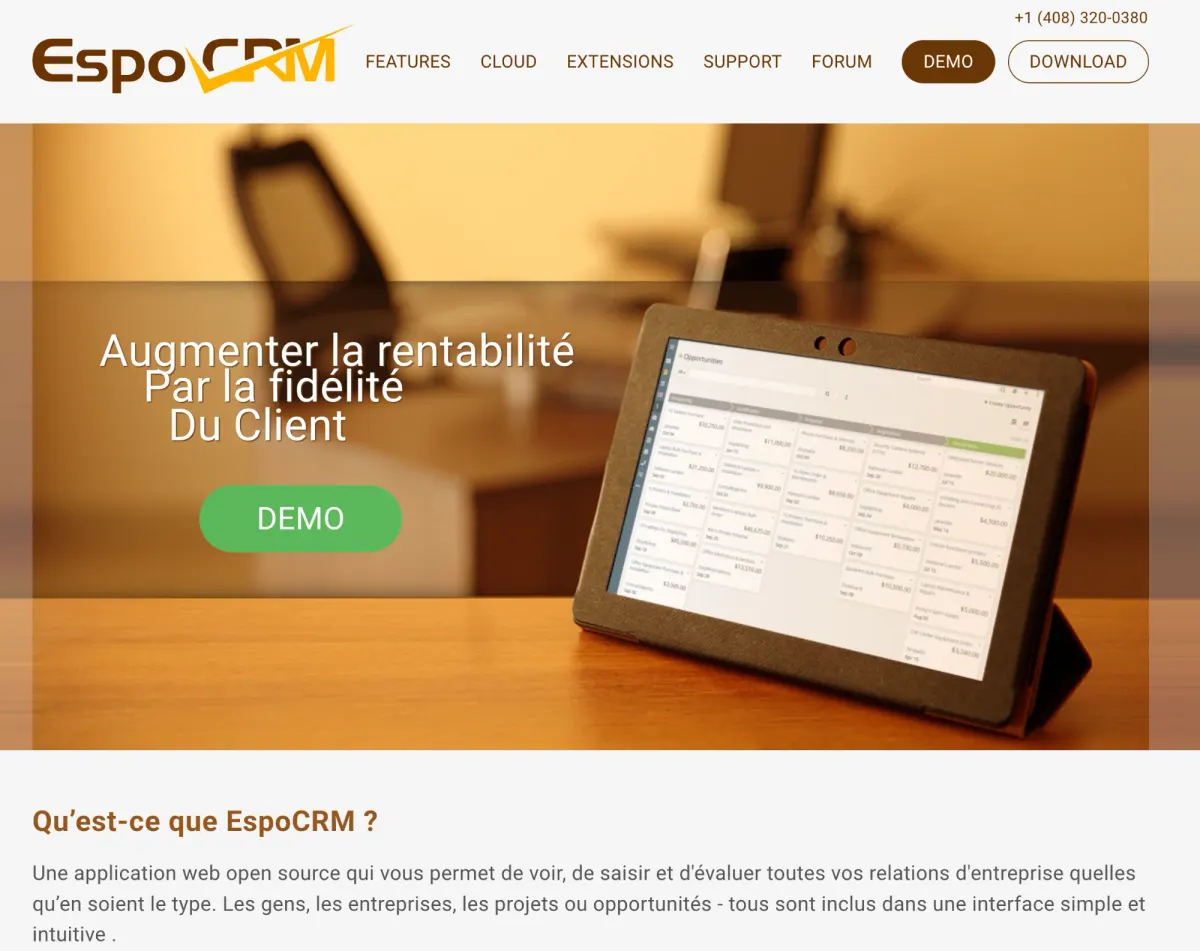
EspoCRM is an open-source CRM you install on your own server. Its assignment rules let you distribute new leads across a team in rotation (round-robin) or to whoever has the fewest open records (least-busy), which is exactly what a small inbound sales team needs.
Leads come in through web-to-lead forms, the API or email. Workflows can add conditions such as country or lead source before the rule fires. The limit is the model: it assigns leads to your own users, it does not sell them to outside buyers or handle per-buyer caps and prices.
Where it stops
- You host, back up and update it yourself
- Assignment is to internal users only
- No buyer billing, no ping-post, no profit reporting
2. Odoo CRM (Community)
Cost: Free, open source, self-hosted; a limited free plan exists online. Routing: Assignment rules per sales team, round-robin style.
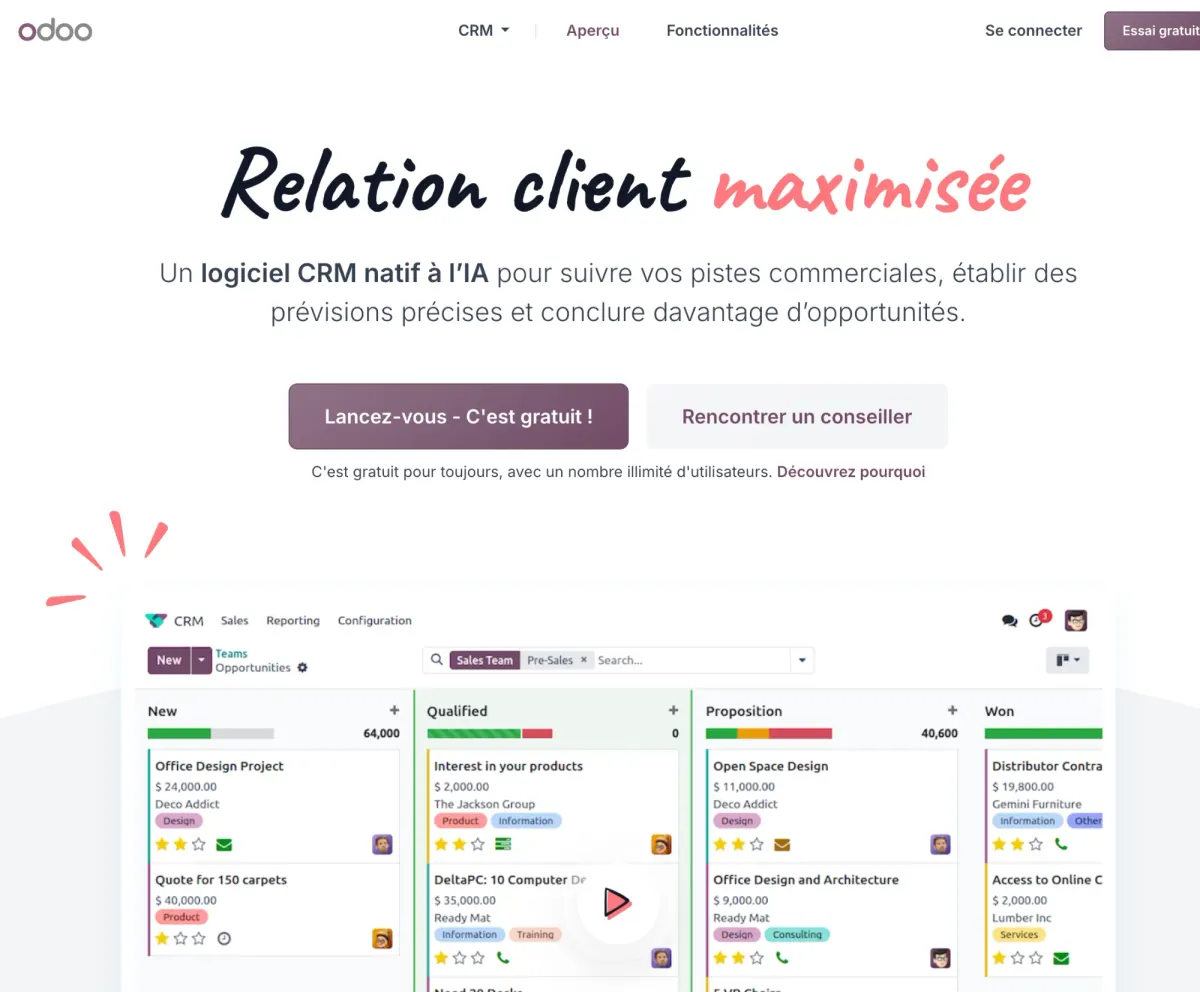
Odoo's CRM app assigns incoming leads to members of a sales team with rules based on domain filters, so you can send leads for one country or product to one team and let the app spread them across reps.
The Community edition is free and self-hosted. Odoo also offers a free online plan limited to one app, which can be the CRM. The strength is the wider suite; the weakness for lead sellers is the same as any CRM: it routes to your people, not to paying buyers.
Where it stops
- Automatic assignment needs setup per team and runs on a schedule rather than in real time
- Some assignment and lead enrichment features are enterprise only
- No external buyer delivery or auctions
3. Bitrix24
Cost: Free plan, hosted, with limits on users, storage and automation. Routing: Queue-based distribution and automation rules.
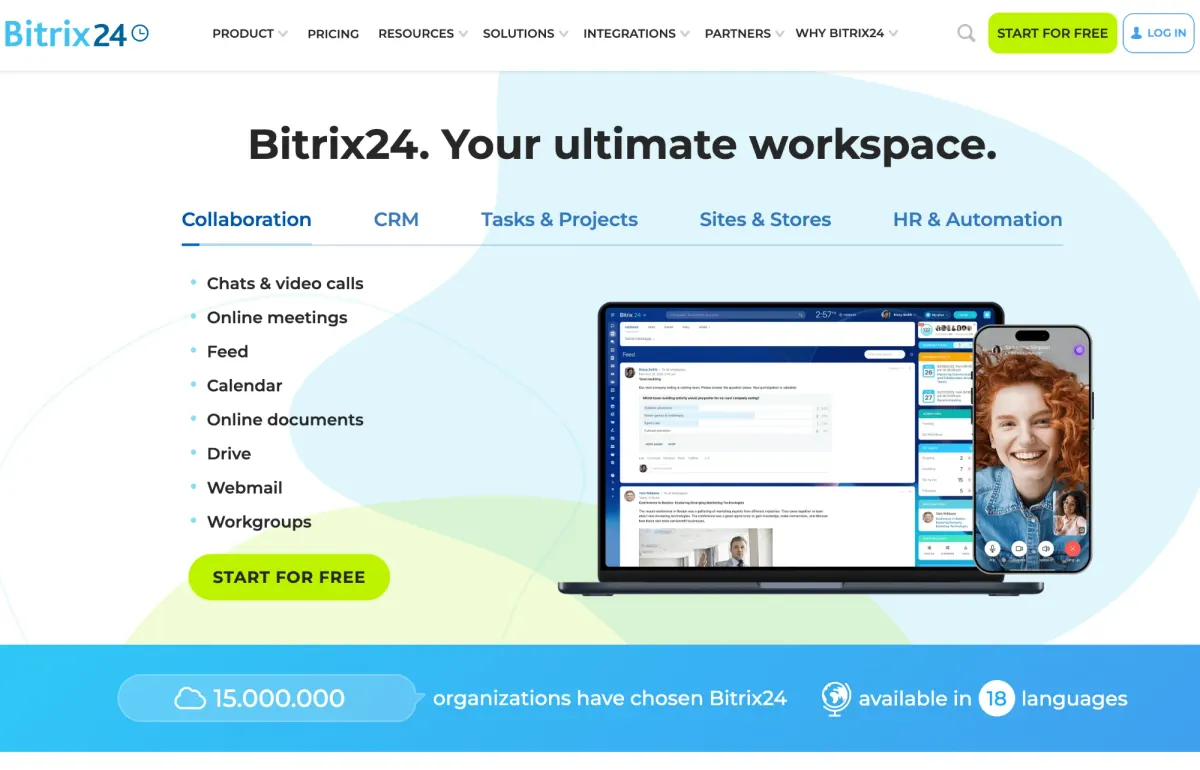
Bitrix24's free plan includes a CRM with lead queues: new leads can be handed to responsible users in turn, and automation rules can reassign based on fields or inactivity. It is hosted, so there is nothing to install.
The free tier's limits on users, storage and automation change over time, so check the current plan page. Teams tend to hit the automation limits first once routing rules get more specific.
Where it stops
- Free plan limits move and can force an upgrade
- Routing rules are less flexible than a dedicated platform
- Internal assignment only
4. SuiteCRM
Cost: Free, open source, self-hosted. Routing: Round-robin assignment through the workflow module.
SuiteCRM is a long-standing open-source CRM. Its workflow module can assign new leads to users in round-robin or by rules, with conditions on any field, and can send notifications on assignment.
It is powerful but takes configuration and a server. Like the other CRMs here, it handles internal assignment, not selling leads to several buyers with caps and prices.
Where it stops
- Configuration and hosting are on you
- The interface feels dated next to newer tools
- No buyer management or delivery to external systems beyond integrations you build
5. Mautic
Cost: Free, open source, self-hosted. Routing: Campaign actions and webhooks, owner assignment.
Mautic is open-source marketing automation: forms, segments, email campaigns and scoring. Routing is not its core, but campaigns can set a contact owner based on conditions and fire webhooks to push a lead into another system.
If your problem is following up on leads by email before assigning them, Mautic fits. If your problem is deciding which of several buyers or reps gets a lead in seconds, it is the wrong tool.
Where it stops
- Routing logic is basic and campaign based
- Self-hosting Mautic takes ongoing maintenance
- No caps, auctions or buyer delivery
6. n8n (or Zapier's free tier)
Cost: n8n is free to self-host; hosted automation tools have small free tiers. Routing: Anything you build: rules, round-robin, webhooks to buyers.
An automation tool is the do-it-yourself route. A workflow receives the lead by webhook, applies rules (state, product, caps stored in a sheet or database), and posts the lead to a CRM, a buyer endpoint or a spreadsheet. n8n can be self-hosted at no cost; hosted tools such as Zapier or Make have free tiers with low task limits.
This is the only free option that can deliver to external buyers, because you write the delivery step yourself. It is also the option that breaks quietly: a buyer changes a field, a cap sheet is out of date, a workflow errors at 2 a.m., and nobody is billed correctly at month end.
Where it stops
- You build and maintain caps, retries, fallback and billing yourself
- No reporting on profit per source unless you build it
- Free tiers of hosted tools run out fast at real lead volumes
What no free tool does
The free options above share the same ceiling. If any of these is your daily work, a free tool will cost you more in lost leads than a subscription.
- Ping-post auctions. Offering each lead to several buyers and selling to the best bid needs an auction engine with timeouts and floor prices. See how ping-post works.
- Fallback when a buyer rejects. Retrying with the next buyer or a ring tree automatically, so rejected leads are resold instead of lost. Our guide to selling unsold leads explains why this is where the margin is.
- Caps, filters and schedules per buyer. Managed by the system, applied before delivery, changed without a developer.
- Buyer billing. Counting delivered leads, returns and credits per buyer and producing invoices.
- Profit per source. Cost per lead from each ad platform or affiliate next to revenue per buyer, after returns. Without it you cannot tell which source is losing money.
The do-it-yourself setup, honestly
Plenty of lead sellers start with a form, a webhook, an automation workflow and a spreadsheet of buyers. It works at low volume with one or two buyers. It stops working when a buyer changes their posting spec, when a cap is reached mid-day and the sheet is not updated, or when month-end billing means reconciling three sources of truth. At that point the "free" setup is costing a few hours a week and an unknown number of leads. Put a number on it with the lead profit calculator.
When to move to a paid platform
- You have more than one buyer for the same leads, or more than one source of leads.
- Rejected leads are not resold automatically.
- You cannot see profit per source after returns.
- Billing buyers takes more than an hour a month.
Two or more of these and a free trial is the cheaper way to find out what better routing is worth. Compare the paid platforms in our ranking, or start with the Vertikl review.
Frequently asked questions
Is there completely free lead distribution software?
Yes, for internal routing: open-source CRMs such as EspoCRM, Odoo Community and SuiteCRM assign leads to your own reps at no license cost, and n8n lets you build custom routing. There is no free tool that runs ping-post auctions, bills buyers and tracks profit per source; for that, dedicated platforms offer free trials instead.
Can I sell leads to buyers with a free tool?
Only by building it yourself with an automation tool such as n8n, including delivery, caps, retries and billing. Most teams that sell leads outgrow that setup quickly because errors cost real money.
What is the difference between free and open source here?
Open-source tools are free to use but you host and maintain them. Free plans of hosted tools cost nothing but cap users, storage or automation and can change their limits. Both are fine for internal assignment at small volumes.
Which free option is the easiest to set up?
Bitrix24, because it is hosted. EspoCRM is the easiest of the self-hosted CRMs to configure for round-robin assignment.
Is a free trial the same as free software?
No. A trial gives you the full platform for a limited period, then you pay. Vertikl's 14-day trial includes migration and support, so it is a way to test a real setup rather than a permanently free tier.
Published by Vertikl. Vendor details come from public material; to request a correction, write to contact@vertikl.co.